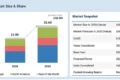
The Automotive Lighting Market size is projected to grow from USD 22.5 billion in 2023 to USD 30.4 billion by 2030, registering a CAGR of 4.4% during the forecast period. Increasing adoption of LED technology, government safety regulations, demand for advanced lighting systems, and growing integration of adaptive lighting technologies are supporting Automotive Lighting Market growth.
The global Automotive Lighting Market is witnessing steady growth as vehicle manufacturers increasingly focus on safety, visibility, energy efficiency, aesthetics, and advanced lighting functionality. Automotive lighting has evolved from conventional illumination systems into intelligent technologies that support vehicle safety, driver visibility, design personalization, and advanced driving functions.
Automotive Lighting Market Overview
Automotive lighting includes lighting systems installed in vehicles for illumination, signaling, visibility, safety, and interior aesthetics. These systems include headlamps, tail lamps, indicators, daytime running lights (DRLs), brake and reverse lights, license plate lamps, fog lamps, and interior lighting.
The market covers lighting technologies such as halogen, LED, and xenon, along with different vehicle positions and applications. The growing integration of advanced electronics and lighting technologies is transforming automotive lighting from a basic vehicle component into an important safety and design feature.
Vehicle Safety and Visibility Driving Automotive Lighting Market Growth
Vehicle safety and improved visibility are major factors driving the Automotive Lighting Market. Automotive lighting systems help drivers identify road conditions, other vehicles, pedestrians, and obstacles, particularly during nighttime and low-visibility conditions.
Government regulations requiring specific lighting systems, including daytime running lights and other safety-related lighting features, are also supporting market demand. Automakers are consequently investing in advanced lighting technologies that improve illumination while enhancing vehicle appearance and functionality.
Exterior Lighting Dominating the Automotive Lighting Market
Exterior lighting is projected to remain the dominant application in the Automotive Lighting Market during the forecast period.
The segment includes essential lighting components such as headlights, tail lamps, indicators, Center High Mounted Stop Lamps (CHMSL), brake and reverse lights, and license plate lights. These systems are required across most vehicle categories and therefore represent a substantial portion of overall automotive lighting demand.
Advancements in front and rear lighting, combined with government mandates for technologies such as DRLs and adaptive lighting, are further supporting exterior lighting market growth.
Download PDF Brochure @ https://www.marketsandmarkets.com/pdfdownloadNew.asp?id=1133
LED Technology Driving Automotive Lighting Market Demand
LED is expected to be the fastest-growing automotive lighting technology through 2030. LED lighting provides advantages such as energy efficiency, durability, design flexibility, and compatibility with advanced adaptive lighting functions.
LED headlamps and taillights are increasingly being adopted in passenger vehicles, while LED technology is also expanding into vehicle interiors, including dashboards, gloveboxes, dome lamps, and ambient lighting.
Technological developments such as matrix LED and OLED are further expanding the capabilities of automotive lighting systems. These technologies offer greater design flexibility and enable more sophisticated lighting functions.
Adaptive Lighting and Matrix LED Creating New Opportunities
Adaptive automotive lighting is emerging as an important trend in the market. Adaptive lighting systems can adjust illumination according to factors such as steering angle, road curvature, suspension movement, and surrounding traffic conditions.
Features such as automatic ON/OFF, high-beam assist, headlight leveling, bending/curve lighting, and adaptive beam control can improve visibility while helping drivers respond to changing road conditions.
Matrix LED technology is also gaining attention because it can provide sophisticated control of individual lighting elements, supporting improved illumination and advanced vehicle design.
Electric Vehicles Accelerating Advanced Automotive Lighting Adoption
The increasing adoption of electric vehicles (EVs) is creating additional opportunities for advanced automotive lighting technologies. EV manufacturers are increasingly integrating energy-efficient LED systems to minimize electrical consumption while maintaining high levels of illumination and styling flexibility.
The growing demand for technologically advanced EVs, combined with increasing consumer interest in distinctive vehicle design, is supporting the integration of LED, adaptive, and other intelligent lighting technologies.
The automotive lighting market therefore continues to evolve alongside both conventional ICE vehicles and electric vehicles.
Interior and Ambient Lighting Enhancing Vehicle Design
Automotive lighting is increasingly being used inside vehicles to improve comfort, aesthetics, personalization, and the overall passenger experience.
Ambient lighting, dashboard lighting, dome lamps, glovebox illumination, and other interior lighting applications are becoming increasingly important, particularly in mid-range and premium vehicles. Automakers are using customizable lighting designs to differentiate vehicle interiors and create more sophisticated cabin environments.
Growing demand for comfort and luxury features is therefore supporting the expansion of automotive interior lighting applications.
Europe Emerging as the Second-Largest Automotive Lighting Market
Europe is expected to remain the second-largest region in the Automotive Lighting Market during the forecast period. Stringent government regulations, strong automotive manufacturing capabilities, and the presence of major OEMs and Tier 1 suppliers are supporting regional demand.
European manufacturers are increasingly incorporating advanced lighting technologies into vehicles, including adaptive headlamps, LED headlights, and intelligent lighting systems. Regulations focused on improving road safety and reducing fatalities are also encouraging the adoption of advanced vehicle lighting technologies.
Asia Pacific Leading the Automotive Lighting Market Share
Asia Pacific is expected to remain the largest regional market for automotive lighting. Strong vehicle production, particularly in China, combined with increasing penetration of LED lighting systems and the presence of major lighting suppliers, supports regional market leadership.
Increasing vehicle production and rapid industrialization across the region are creating substantial demand for automotive lighting systems. The growing adoption of LED lighting in passenger vehicles and increasing demand for advanced lighting solutions are expected to further strengthen the region’s market position.
Future Outlook for the Automotive Lighting Market
The future of the Automotive Lighting Market will be shaped by LED technology, adaptive lighting, matrix LED, OLED, intelligent exterior lighting, ambient interior lighting, and increasing vehicle electrification.
Automakers are expected to continue investing in advanced lighting technologies that combine safety, visibility, energy efficiency, aesthetics, and personalization. The expansion of LED technology from premium vehicles into mid-range models is expected to broaden the addressable market, while adaptive lighting and intelligent lighting systems will create additional opportunities.
With the market projected to reach USD 30.4 billion by 2030 from USD 22.5 billion in 2023 at a CAGR of 4.4%, the Automotive Lighting Market is expected to maintain steady growth as vehicle manufacturers continue adopting advanced lighting technologies across ICE and electric vehicles.
Request Free Sample Report @ https://www.marketsandmarkets.com/requestsampleNew.asp?id=1133