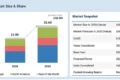
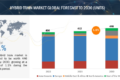
The global Automotive Sensor Fusion Market Size is projected to expand from USD 0.3 billion in 2023 to USD 3.3 billion by 2030, representing a CAGR of approximately 42.4% over the forecast period.
This strong growth is driven by the rising demand for advanced driver assistance systems (ADAS), higher levels of vehicle automation (L2, L3, L4), stringent safety regulations and consumer expectations for smarter, safer mobility.
Sensor Fusion Segment Outlook & Growth Opportunities
Within this market, sensor platform approach (high-level fusion, mid-level fusion, low-level fusion) and fusion level (data fusion, feature fusion, decision fusion) are key segmentation categories.
- Data fusion (combining raw data from multiple sensors) is expected to dominate in value as it enhances situational awareness and decision-making in automated driving systems.
- Growth is strongest in vehicles with higher autonomy levels (L3, L4) and electric vehicles (BEV, PHEV, FCEV) where advanced sensor fusion is critical.
Major opportunities:
- Suppliers who can provide integrated hardware + software sensor fusion stacks (cameras + radar + LiDAR + AI/algorithms) will capture value.
- OEMs transitioning to higher automation levels will need bigger sensor-fusion budgets per vehicle.
- Regions with strong safety regulation and ADAS penetration will see faster uptake of fusion technologies.
“Asia Pacific to Lead the Automotive Sensor Fusion Market”
According to the report, the Asia Pacific region is projected to hold the largest market share for automotive sensor fusion by 2030, driven by strong OEM activity, growing vehicle production, and regulatory impetus for safety and automation.
Other regional highlights:
- Europe is rising rapidly thanks to stringent vehicle safety regulations, high ADAS penetration and premium vehicle segments.
- North America continues to invest in autonomous vehicle programs, sensor-fusion R&D and semiconductors, providing value pools despite slower volume compared to Asia Pacific.
Download PDF Brochure @ https://www.marketsandmarkets.com/pdfdownloadNew.asp?id=260287840
Market Trends Shaping the Industry
- Growing integration of AI, deep learning and edge computing in sensor fusion systems to enable real-time perception and decision-making.
- Shift from hardware-only sensor stacks toward software-defined perception platforms — sensor fusion becomes a software-driven differentiator.
- Adoption of multi-sensor arrays (camera + radar + LiDAR + ultrasonic) to improve redundancy, safety and performance in challenging conditions.
- Expansion of sensor fusion applications beyond premium vehicles into mainstream cars and commercial vehicles as cost declines and regulation tightens.
Challenges & Industry Restraints
- High cost and complexity of sensor fusion systems — combining multiple sensors, compute, AI algorithms and validation is expensive.
- Supply-chain and integration risks — ensuring reliability, calibration and redundancy in real-world conditions remains a barrier.
- Regulatory & testing burden — validating sensor fusion systems for safety and functional performance is time- & resource-intensive.
- Market still in early phases for some segments — many vehicles still rely on simpler ADAS rather than full fusion systems, so volume ramp is gradual.
Why This Matters to Stakeholders
For OEMs, Tier-1 suppliers, algorithm/software vendors, semiconductor firms and mobility service providers — the key take-aways:
- Sensor fusion is a growth value pool: the entire stack (hardware + software + fusion algorithms) is becoming critical for the next generation of vehicles.
- Early movers who can deliver robust, scalable fusion systems will gain competitive advantage as the market transitions from ADAS to autonomy.
- For component suppliers and software vendors: offering complete sensor fusion modules or middleware can unlock new revenue streams beyond traditional sensors.
- For investors and strategic planners: the forecast growth to USD 3.3 billion by 2030 highlights the strategic importance of sensor fusion in vehicle architecture and the broader mobility ecosystem.
Request Free Sample Report @ https://www.marketsandmarkets.com/requestsampleNew.asp?id=260287840
FAQ
Q1: What is the Automotive Sensor Fusion market size?
The market is projected to grow from USD 0.3 billion in 2023 to USD 3.3 billion by 2030.
Q2: What is the CAGR for the sensor fusion market for automotive from 2023-2030?
The CAGR is approximately 42.4%.
Q3: Which region will dominate the automotive sensor fusion market?
The Asia Pacific region is expected to lead in terms of volume and growth by 2030.
Q4: What factors are driving growth in the market?
Drivers include higher levels of vehicle automation (L2–L4), stringent safety regulations, increased ADAS penetration and the need for multi-sensor perception systems.