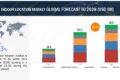
As businesses continue to digitize operations and improve customer experiences, the Indoor location market is emerging as a critical component of modern enterprise infrastructure. From hospitals and airports to manufacturing plants, retail stores, and corporate campuses, organizations are increasingly adopting indoor positioning technologies to improve navigation, optimize asset utilization, and enhance operational efficiency.
According to the latest Indoor location Market Report from MarketsandMarkets, growing demand for real-time location intelligence, smart building technologies, and connected devices is creating significant opportunities across the global Indoor location industry.
Indoor Location Market Analysis: Why Demand Is Rising
Unlike GPS, which performs well outdoors, indoor location technologies are specifically designed to provide accurate positioning and navigation inside buildings. As organizations seek greater visibility into assets, personnel, and customer movement, indoor positioning solutions have become an essential part of digital transformation strategies.
The Indoor location software market is benefiting from rapid advances in Bluetooth Low Energy (BLE), Ultra-Wideband (UWB), Wi-Fi positioning, RFID, artificial intelligence, and IoT-enabled tracking systems. These technologies enable businesses to monitor equipment, improve workplace safety, streamline inventory management, and deliver seamless navigation experiences.
As enterprises prioritize operational efficiency and data-driven decision-making, Indoor location Market Growth continues to accelerate worldwide.
Download PDF Brochure @ https://www.marketsandmarkets.com/pdfdownloadNew.asp?id=989
Indoor Location Market Size and Revenue Forecast
The latest Indoor location Market Forecast indicates strong expansion across multiple industries and regions. Increasing investments in smart infrastructure, connected facilities, and real-time analytics are expected to drive sustained market growth throughout the forecast period.
Indoor Location Market Overview
The global Indoor Location Market size was reached $11.9 billion in 2024 and is projected to attain $31.4 billion by 2029, at a CAGR of 21.4% during the forecast period.
It is a direct result of the increased uptake of smartphones, connected devices and applications that incorporate location. The rising number of applications based on beacons and BLE tags, the rising integration of the beacons into the cameras, LED lighting, POS devices, and signages, and the ineffectiveness of GPS in indoor location are expected to contribute to the growth of the indoor location market. This solution enables the user to flag inventories of high value for example wheelchairs so that when the personnel is seeking for the inventory, it will be easier to find it. Also, with the advancement in the usage of 5G network for location-based services and rising significance of Industry 4. Smart home, smart city initiatives, and smart manufacturing are expected to offer a massive chance for the indoor location market in the future. The public offices and hospitals’ infrastructure using RFID tags, BLE beacons, and Wi-Fi for the need and utilization of the indoor location technologies would enhance the absorption of the information if the location of the objects and people is effective. To further improve the current freedom of operation that happens within hospitals, many firms dealing in indoor location services provide asset tracking services to find the hospitals’ assets.
Market Size and Forecast:
- 2023 Market Size: USD 10.0 Billion
- 2024 Projected Market Size: USD 15.9 Billion
- 2029 Forecasted Market Size: USD 29.4 Billion
- Growth Rate (2024-2029): CAGR of 21.4%
- Data available from 2024 to 2029
- US Indoor Location Market
- Market size USD 4.13 billion in 2025
- Market forecast USD 9.97 billion in 2030
- Market Growing at a CAGR of 19.3%
- BLE Indoor Location Market
- Market size USD 4.30 billion in 2025
- Market forecast USD 11.88 billion in 2030
- Market Growing at a CAGR of 22.5%
- APAC Indoor Location Market
- Market size USD 2.79 billion in 2025
- Market forecast USD 8.52 billion in 2030
- Market Growing at a CAGR of 25.0%
- Saudi Arabia Indoor Location Market
- Market size USD 0.36 billion in 2025
- Market forecast USD 1.10 billion in 2030
- Market Growing at a CAGR of 25.0%
- Europe Indoor Location Market
- Market size USD 3.72 billion in 2025
- Market forecast USD 10.50 billion in 2030
- Market Growing at a CAGR of 23.0%
- Ultra-Wideband (UWB) Indoor Location Market
- Market size USD 1.65 billion in 2025
- Market forecast USD 4.94 billion in 2030
- Market Growing at a CAGR of 24.5%
Organizations are increasingly deploying indoor location solutions for:
- Asset tracking and monitoring
- Workforce management
- Indoor navigation
- Inventory management
- Location analytics
- Customer engagement applications
- Smart building operations
These use cases are contributing significantly to Indoor location Market Revenue Forecast expectations and expanding the overall Indoor location market size globally.
Key Indoor Location Market Growth Drivers
Growing Adoption of Smart Buildings
Smart buildings rely heavily on location intelligence to optimize energy usage, occupancy management, security, and facility operations. As smart infrastructure investments increase, demand for indoor positioning technologies continues to grow.
Rising Need for Real-Time Asset Tracking
Industries such as healthcare, manufacturing, logistics, and retail require accurate asset visibility to improve efficiency and reduce operational costs. Indoor location platforms enable organizations to track valuable equipment and inventory in real time.
Expansion of IoT Ecosystems
The rapid growth of connected devices is strengthening Indoor location Market Technology Adoption across industries. Sensors, beacons, tags, and IoT-enabled devices generate valuable location data that supports business intelligence initiatives.
Enhanced Customer Experience Requirements
Retailers, airports, hospitals, and entertainment venues are increasingly using indoor navigation solutions to improve visitor experiences and reduce friction during customer journeys.
Advancements in UWB and BLE Technologies
Technologies such as Ultra-Wideband and Bluetooth Low Energy continue to improve positioning accuracy, making indoor location solutions more attractive for enterprise deployments.
Indoor Location Industry Trends Shaping the Future
Several Indoor location Market Trends are expected to influence future market development:
AI-Powered Location Analytics
Artificial intelligence is helping organizations transform location data into actionable business insights, enabling predictive analytics and operational optimization.
Digital Twin Integration
Indoor location systems are increasingly being integrated with digital twin platforms, creating real-time visual representations of physical environments.
Autonomous Operations
Manufacturing facilities and warehouses are leveraging location technologies to support robotics, automation, and autonomous workflows.
Smart Healthcare Applications
Hospitals are adopting indoor location platforms for patient tracking, equipment management, staff coordination, and emergency response optimization.
Hybrid Workplace Management
Organizations are using indoor positioning systems to improve workspace utilization and support evolving hybrid work environments.
These developments represent some of the most influential Indoor location Industry Trends currently transforming the market.
Indoor Location Market Regional Analysis
North America Indoor Location Market
North America remains a leading region due to early adoption of smart building technologies, advanced wireless infrastructure, and strong enterprise investment.
The United States Indoor location market continues to account for a significant share of global revenue, supported by widespread deployment across healthcare, retail, transportation, and manufacturing sectors. The Canada Indoor location market is also experiencing steady growth as organizations invest in digital infrastructure.
APAC Indoor Location Market
The APAC Indoor location market is expected to witness some of the fastest growth rates globally.
Major contributors include:
- China Indoor location market
- India Indoor location market
- Japan Indoor location market
- South Korea Indoor location market
Rapid urbanization, smart city projects, industrial modernization, and increasing enterprise digitization are fueling regional demand. The China Indoor location market, in particular, is benefiting from large-scale investments in smart infrastructure and IoT ecosystems.
Europe Indoor Location Market
Europe continues to be a significant contributor to global market expansion.
Key markets include:
- Germany Indoor location market
- UK Indoor location market
- France Indoor location market
- Italy Indoor location market size
- Spain Indoor location market size
Growing Industry 4.0 initiatives, digital transformation programs, and smart facility investments are driving adoption across the region. The UK Indoor location market and Germany Indoor location market remain among Europe’s most active technology adopters.
GCC Indoor Location Market
Countries across the Gulf region are investing heavily in smart cities, airports, healthcare infrastructure, and large-scale commercial developments, creating significant opportunities for the GCC Indoor location market.
South America Indoor Location Market
The South America Indoor location market is gradually expanding as enterprises modernize operations and improve location-based service capabilities across retail, logistics, and transportation sectors.
Indoor Location Companies:Competitive Landscape
The Indoor location Market Competitive Landscape is characterized by continuous innovation, strategic partnerships, and technology advancements.
Leading Indoor location Market Key Players include:
- Cisco Systems
- Zebra Technologies
- Microsoft
- Hewlett Packard Enterprise (HPE)
- HERE Technologies
- Ubisense
- Quuppa
- IndoorAtlas
- Infsoft
- Pointr
- BlueIoT
These companies are focusing on enhancing positioning accuracy, expanding software capabilities, and integrating AI-powered analytics to strengthen their market positions.
Indoor Location Market Strategic Insights
Organizations evaluating indoor positioning technologies should focus on:
- Scalability of deployment
- Integration with existing IT infrastructure
- Accuracy requirements
- Security and privacy compliance
- AI and analytics capabilities
- Long-term operational benefits
Successful Indoor location Market Enterprise Adoption strategies increasingly combine location intelligence with broader digital transformation initiatives.
Indoor Location Market Emerging Opportunities
Several high-growth opportunities are expected to shape the next phase of market development:
- Smart manufacturing facilities
- Healthcare digitalization
- Airport modernization
- Smart retail experiences
- Warehouse automation
- Autonomous robotics
- Digital twin applications
- Smart city infrastructure
These areas are expected to create substantial Indoor location Market Emerging Opportunities over the coming years.
Indoor Location Market Future Outlook
The Indoor location Market Future Outlook remains highly positive as organizations seek greater operational visibility, improved customer experiences, and more intelligent facility management capabilities.
Advancements in AI, IoT, BLE, UWB, cloud computing, and real-time analytics will continue to strengthen Indoor location Market Technology Adoption across industries. As smart buildings and connected environments become more common, demand for accurate indoor positioning solutions is expected to accelerate further.
The global Indoor location forecast suggests sustained growth driven by enterprise modernization efforts, increasing digital infrastructure investments, and the growing importance of location intelligence in business operations.
Frequently Asked Questions Answered by this report:
What is the Indoor location market?
The Indoor location market consists of technologies and solutions that enable accurate positioning, navigation, tracking, and analytics within indoor environments where traditional GPS systems are ineffective.
What are the growth drivers for Indoor location Market Growth?
Major Indoor location market growth drivers include smart building adoption, IoT expansion, demand for real-time asset tracking, advancements in BLE and UWB technologies, and increasing enterprise digitization.
Which industries are adopting indoor location solutions?
Healthcare, retail, manufacturing, logistics, transportation, airports, hospitality, education, and smart building sectors are among the leading adopters.
Which region holds the largest Indoor location Market Share?
North America currently represents one of the largest markets due to advanced technology infrastructure and strong enterprise adoption, while APAC is emerging as the fastest-growing region.
Who are the leading Indoor location Companies?
Major companies include Cisco Systems, Zebra Technologies, Google, Microsoft, HPE, HERE Technologies, Quuppa, IndoorAtlas, Ubisense, and Infsoft.
What are the latest Indoor location Market Trends?
Key trends include AI-powered location analytics, digital twins, autonomous operations, smart healthcare deployments, hybrid workplace management, and IoT-enabled tracking systems.
What is the Indoor location Market Outlook through 2030?
The Indoor location Market Outlook remains highly favorable, supported by growing demand for location intelligence, smart infrastructure, connected facilities, and enterprise digital transformation initiatives.