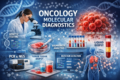
The global oncology molecular diagnostics market is experiencing remarkable growth, driven by the rising prevalence of cancer, increasing demand for personalized medicine, and continuous advancements in genomic technologies. Molecular diagnostics has revolutionized cancer detection and management by enabling clinicians to identify genetic mutations, biomarkers, and molecular signatures associated with various tumor types. This shift from conventional histopathology to genomic-driven insights is reshaping oncology care worldwide.
Market Overview
Oncology molecular diagnostics refers to laboratory techniques used to analyze biological markers in the genome and proteome to detect cancer. Unlike traditional diagnostic methods, molecular diagnostics provides detailed insights into tumor biology, enabling targeted treatment strategies.
The growing burden of cancer globally is a primary factor fueling market expansion. According to global health estimates, millions of new cancer cases are diagnosed each year, increasing the need for early detection and precise therapeutic approaches. The integration of molecular diagnostics into clinical workflows has significantly improved early-stage detection, prognosis prediction, and treatment monitoring.
Technological advancements such as next-generation sequencing (NGS), polymerase chain reaction (PCR), in situ hybridization (ISH), and microarrays are enhancing diagnostic accuracy and reducing turnaround times. Additionally, the expansion of companion diagnostics—tests designed to identify patients who will benefit from specific targeted therapies—has further strengthened market growth.
Key Technologies Driving the Market
1. Next-Generation Sequencing (NGS)NGS is one of the most transformative technologies in oncology molecular diagnostics. It enables rapid sequencing of large segments of DNA, allowing detection of multiple gene mutations simultaneously. NGS supports comprehensive genomic profiling, which is essential for precision oncology.
2. Polymerase Chain Reaction (PCR)
PCR remains a widely used technique due to its high sensitivity and specificity. Real-time PCR and digital PCR are particularly valuable for detecting low-frequency mutations in tumor samples.
3. In Situ Hybridization (ISH) and FISH
ISH and fluorescence in situ hybridization (FISH) are essential for detecting chromosomal abnormalities and gene amplifications, particularly in breast and lung cancers.
Applications in Oncology
Molecular diagnostics plays a crucial role across multiple cancer types:
- Breast Cancer – HER2 gene amplification testing guides targeted therapy decisions.
- Lung Cancer – EGFR, ALK, and KRAS mutation testing helps determine appropriate treatment strategies.
- Colorectal Cancer – KRAS and BRAF mutation analysis supports therapy selection.
- Hematological Malignancies – Detection of specific genetic rearrangements assists in disease classification and monitoring.
One of the fastest-growing segments is liquid biopsy, a minimally invasive method that detects circulating tumor DNA (ctDNA) in blood samples. Liquid biopsy allows real-time monitoring of tumor evolution, treatment response, and minimal residual disease.
Market Drivers
Several factors are accelerating growth in the oncology molecular diagnostics market:
Rising Cancer Incidence
The increasing global cancer burden continues to generate demand for accurate diagnostic tools.
Growing Adoption of Personalized Medicine
Precision medicine relies heavily on molecular profiling to tailor therapies to individual patients.
Expansion of Companion Diagnostics
Regulatory approvals of targeted therapies often require companion diagnostic tests, driving demand for advanced molecular platforms.
Technological Advancements
Automation, AI-based data interpretation, and high-throughput sequencing technologies are improving diagnostic efficiency.
Regional Insights
North America currently dominates the oncology molecular diagnostics market, supported by strong healthcare infrastructure, advanced research capabilities, and favorable reimbursement policies. The presence of major biotechnology and diagnostic companies also contributes to regional leadership.
Europe follows closely due to increasing adoption of genomic medicine and government-supported cancer screening programs. Meanwhile, the Asia-Pacific region is expected to witness the fastest growth, driven by expanding healthcare infrastructure, rising awareness, and increasing investments in biotechnology research.
Competitive Landscape
The oncology molecular diagnostics market is highly competitive, with several global players focusing on innovation, partnerships, and product launches. Key industry participants include:
- F. Hoffmann-La Roche Ltd.
- Thermo Fisher Scientific Inc.
- QIAGEN N.V.
- Illumina, Inc.
- Agilent Technologies, Inc.
These companies are investing heavily in R&D to develop advanced genomic assays, integrated platforms, and AI-driven diagnostic solutions.
Strategic collaborations between pharmaceutical firms and diagnostic companies are becoming increasingly common, particularly in the development of companion diagnostics aligned with targeted therapies.
Challenges in the Market
Despite strong growth prospects, the market faces certain challenges:
- High cost of advanced molecular diagnostic tests
- Complex regulatory frameworks
- Limited reimbursement in developing regions
- Need for skilled professionals in genomic data interpretation
Addressing these challenges will require continued investment in infrastructure, training, and regulatory harmonization.
Future Outlook
The future of the oncology molecular diagnostics market looks highly promising. The integration of artificial intelligence, big data analytics, and cloud-based genomic platforms is expected to enhance diagnostic accuracy and clinical decision-making.
Additionally, the expansion of multi-gene panel testing and whole-genome sequencing will further advance personalized oncology. Liquid biopsy technologies are anticipated to become a standard component of cancer management due to their non-invasive nature and ability to monitor tumor dynamics.
As healthcare systems increasingly prioritize early detection and targeted treatment, molecular diagnostics will remain central to oncology innovation.
Conclusion
The oncology molecular diagnostics market is transforming cancer care by enabling precise, personalized, and data-driven treatment approaches. With rapid technological advancements, expanding clinical applications, and strong industry participation, the market is poised for sustained growth in the coming years.
As precision medicine continues to evolve, molecular diagnostics will play an indispensable role in improving patient outcomes, reducing treatment inefficiencies, and shaping the future of oncology worldwide.