The global mining sector stands at the cusp of a technological revolution. For decades, this industry relied on manual labor, heavy machinery, and reactive maintenance strategies. However, the future of AI in mining industry is reshaping every aspect of exploration, extraction, and processing. Artificial intelligence now offers solutions to long standing challenges such as safety hazards, operational downtime, and environmental compliance. Mining companies are adopting machine learning algorithms to analyze geological data with unprecedented accuracy. This shift reduces human risk in dangerous underground environments while maximizing resource yield.
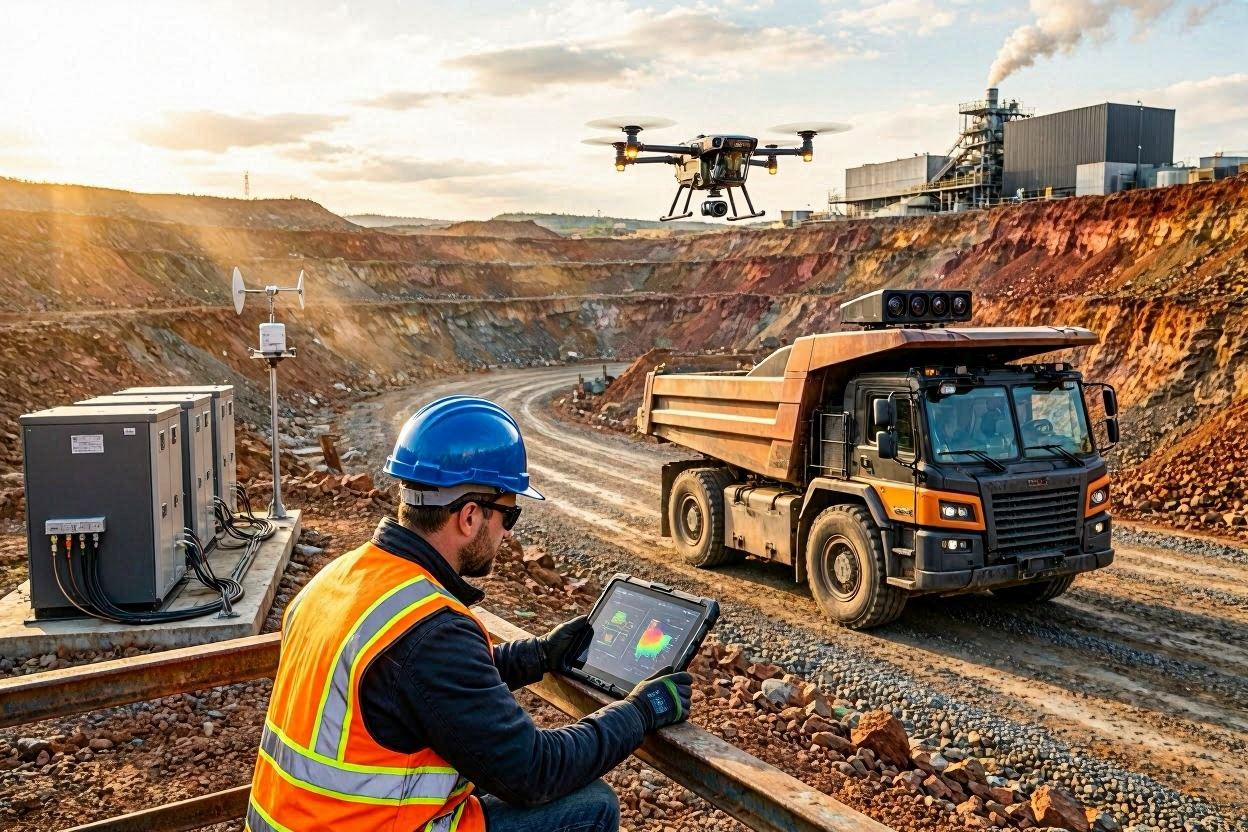
Predictive analytics forms the backbone of this transformation. Sensors installed on drills, loaders, and conveyors generate terabytes of real time data. The future of AI in mining industry depends on processing this data to forecast equipment failures before they occur. For example, an AI model can detect subtle vibration changes in a conveyor belt motor, alerting managers to schedule maintenance during non peak hours. Such proactive intervention slashes unplanned downtime by up to 40 percent according to recent studies. Consequently, operational costs decrease while productivity rises significantly.
The global AI in mining market is projected to grow from USD 2.60 billion in 2025 to USD 9.93 billion by 2032, registering a CAGR of 21.1%.
Download PDF Brochure @ https://www.marketsandmarkets.com/pdfdownloadNew.asp?id=89359179
Autonomous vehicles represent another pillar of this evolution. The future of AI in mining industry includes self driving haul trucks and robotic drilling rigs operating in harsh climates. Companies like Rio Tinto and BHP have already deployed autonomous fleets in Australian iron ore mines. These vehicles navigate complex pit layouts using LIDAR and computer vision without driver fatigue or error. Fleet management systems optimize routes in real time, reducing fuel consumption and tire wear. Moreover, remote operation centers allow human supervisors to manage multiple machines from thousands of miles away.
Key benefits driving the future of AI in mining industry include improved safety records through hazard prediction. AI powered cameras identify loose rocks or gas leaks instantly. Another benefit is enhanced mineral recovery rates via real time grade control. Machine vision systems analyze ore streams on conveyor belts to adjust crusher settings. Additionally, energy optimization algorithms reduce power consumption in ventilation and grinding circuits. Water management also improves through AI driven hydrological modeling for tailings dams. Finally, regulatory compliance becomes simpler with automated environmental monitoring reports.
Exploration geology is notoriously expensive and uncertain. Traditional methods rely on core sampling and human interpretation, which can miss deep deposits. The future of AI in mining industry introduces neural networks that process satellite imagery, geophysical surveys, and historical drill logs. These models identify patterns associated with high grade mineralization far faster than human geologists. For instance, a machine learning system can predict copper or lithium deposits with 80 percent accuracy after training on existing mine data. This capability reduces exploration costs by narrowing down drilling targets. Junior miners particularly benefit from such cost effective reconnaissance tools.
Supply chain logistics also witness a profound upgrade. The future of AI in mining industry integrates with blockchain and IoT to create transparent mineral tracking from pit to port. Smart contracts automatically trigger payments when ore passes specific weight stations. AI dispatch systems coordinate train loading, ship scheduling, and stockpile management to prevent bottlenecks. During market volatility, algorithms adjust extraction rates based on real time commodity prices. This dynamic response protects profit margins while avoiding overproduction waste. As a result, the entire value chain becomes leaner and more responsive to global demand.
Challenges that could slow the future of AI in mining industry include high initial capital expenditure for hardware and software. Many mines operate in remote regions with limited internet bandwidth. Data silos between departments prevent holistic model training. Workforce resistance to automation remains a human factors hurdle. Cybersecurity risks increase as operational technology connects to cloud platforms. Additionally, legacy equipment lacks built in sensors for data collection. Tailings storage facility monitoring requires specialized AI that is still under development. Finally, regulatory frameworks lag behind technological capabilities in most mining jurisdictions.
Sustainability imperatives are accelerating AI adoption in mineral extraction. The future of AI in mining industry aligns with global net zero targets by optimizing energy intensive processes. Crushing and grinding consume up to 50 percent of a mine’s electricity. AI controllers adjust mill speed and feed rates dynamically based on ore hardness, reducing power use by 15 to 20 percent. Similarly, ventilation on demand systems use occupancy sensors and air quality forecasts to run fans only when needed. These measures directly cut carbon emissions while lowering operational expenses. Water recycling also improves through AI guided flocculant dosing in thickeners.
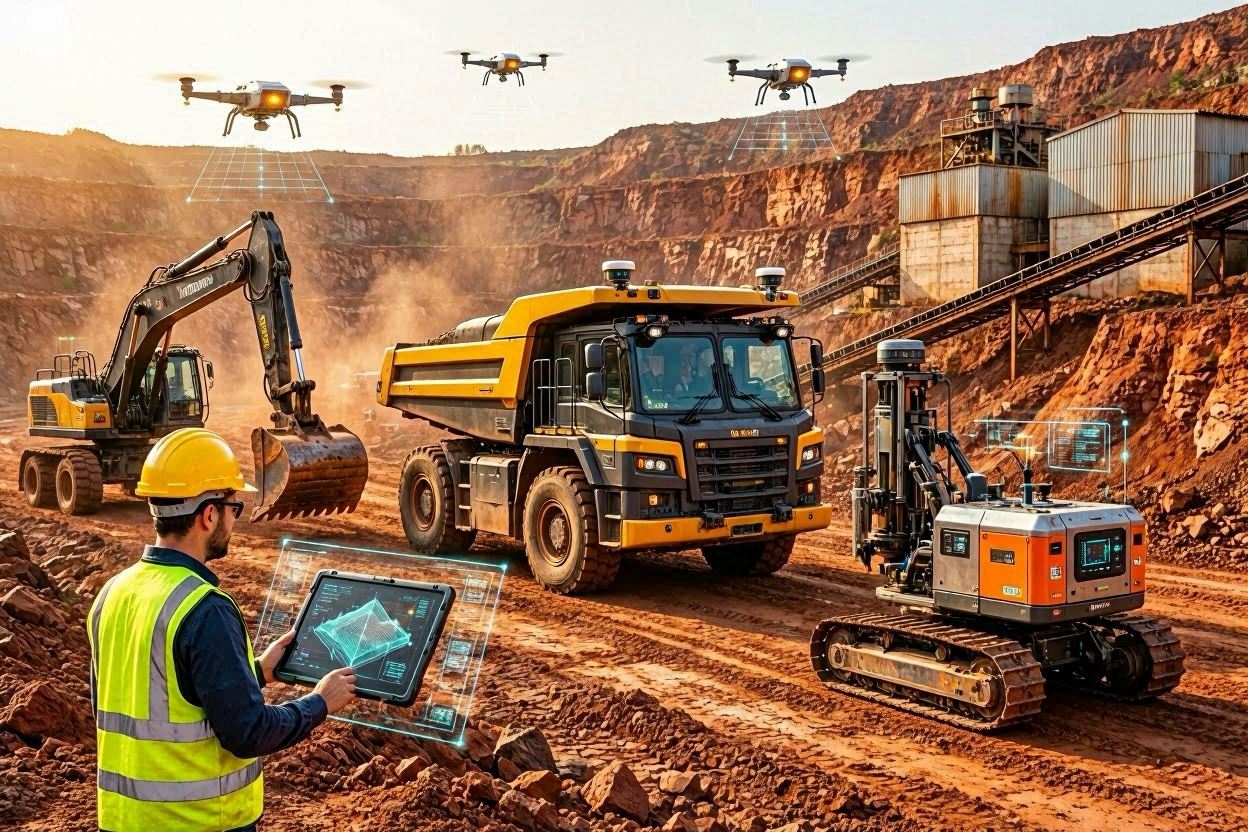
Workforce transformation accompanies this technological shift. Rather than eliminating jobs, the future of AI in mining industry creates new roles such as AI maintenance technicians, data engineers, and remote control center operators. Miners will need digital literacy training alongside traditional safety certifications. Collaborative robots or cobots assist human workers in lifting heavy components or sampling hazardous zones. Voice activated assistants provide hands free access to manuals and checklists in noisy environments. This human AI partnership enhances decision making without replacing experience and intuition. Progressive mining schools are already integrating data science into their curricula to prepare future talent.
Real time ore sorting represents a breakthrough application. The future of AI in mining industry uses dual energy X ray transmission and hyperspectral imaging to separate valuable minerals from waste rock at the conveyor level. Traditional dense media separation loses fine particles and consumes large water volumes. AI driven sorters identify particle by particle differences in atomic density or color, ejecting gangue with compressed air jets. This preconcentration step reduces downstream processing load by up to 30 percent. It also allows mining lower grade zones that were previously uneconomical. Several gold and diamond operations have already reported recovery increases above 10 percent using this technology.
Geotechnical risk management becomes proactive rather than reactive. Slope stability failures and seismic events pose daily threats in open pit and underground mines. The future of AI in mining industry deploys distributed acoustic sensing along fiber optic cables to detect microseismic activity. Machine learning models learn precursory signatures of rock mass failure hours or days in advance. Alerts trigger automated evacuation protocols and equipment repositioning. Similarly, real time subsidence monitoring using satellite radar interferometry feeds into ground movement predictions. These systems save lives while protecting capital intensive infrastructure. Insurance underwriters are starting to offer premium discounts for mines using certified AI geotechnical platforms.
Looking ahead, the integration of generative AI and digital twins will redefine mine planning. A digital twin is a virtual replica of the entire mining operation that updates continuously with sensor data. The future of AI in mining industry includes using generative models to simulate thousands of production scenarios. Managers can ask what if questions about changing commodity prices, weather events, or equipment availability. The AI recommends optimal schedules, blending strategies, and stockpile levels within seconds. This capability turns reactive firefighting into strategic foresight. Early adopters report productivity gains of 25 percent along with reduced ore dilution. As computing costs fall, even small scale mines will access these advanced tools.