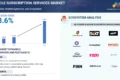
The e-bike market is projected to grow from USD 54.1 billion in 2025 to USD 87.2 billion by 2032, with a CAGR of 7.0%. The market witnessed strong growth between 2019 and 2021 due to increased environmental awareness and demand for alternative mobility during the pandemic. However, 2023 saw a decline in sales across some regions, particularly Europe, due to economic slowdowns and inventory corrections, with Europe’s 2024 ebike sales dropping by 5.7%. Recovery has begun in 2024, led by Asia Pacific and North America, where supportive regulations and improved infrastructure are fueling adoption. Class-I e-bikes continue to dominate, but Class-III models are gaining traction, especially in North America, due to their higher speed capabilities. Demand for e-MTBs and cargo e-bikes is rising rapidly, driven by off-road applications and urban last-mile delivery needs. Enhanced battery technology, rider assist features, and shifting commuter preferences are expected to support long-term market expansion.
“>70NM motor-powered e-bikes are estimated to be the fastest growing segment over the forecast period.”
High motor torque is a defining feature in the evolving e-bike landscape, particularly for off-road, mountain biking, and cargo applications. E-bikes with >70 N·m torque offer robust performance for demanding terrains and heavy-duty tasks, with gear-assisted systems reaching torque outputs of 800–1,000 N·m in extreme off-road conditions. This power is essential in urban logistics for cargo e-bikes handling loads of up to 200 kg, where stability and efficiency are critical for last-mile delivery. Europe remains the largest market for high-torque e-bikes, supported by urban logistics growth and premium recreational use. Advancements in mid-drive motors, like Bosch’s Performance Line CX offering up to 85 N·m with gear amplification, have enabled efficient power delivery while maintaining handling and battery performance. Additionally, brands such as Ariel Rider and Juiced Bikes are pushing torque thresholds further with 85–110 N·m models, signaling an industry shift toward power-centric solutions. However, this trend is mainly concentrated in North America and Europe, where infrastructure and consumer spending can support the USD 3,000+ price range. Regulatory constraints, such as 25–32 km/h speed limits in many regions, continue to restrict mainstream adoption, making high-torque e-bikes a specialized but growing segment in the global market.
Download PDF Brochure @ https://www.marketsandmarkets.com/pdfdownloadNew.asp?id=155422699
“City/urban bikes are projected to be the largest segment during the forecast period as they are a practical, cost-effective, and environmentally friendly solution for urban transportation.“
City or urban e-bikes have quickly gained attention and popularity due to their ease of use, comfort, and practicality for daily city life. As urbanization increases, the demand for e-bikes and other eco-friendly forms of transport is also expected to grow. The main factor driving the growth of city/urban e-bikes is low electricity consumption, and they are easy to maintain, making them economical. City/urban e-bikes are priced between USD 1,000 and USD 3,000, and they are more suitable for city homeowners for short-distance commutes. Most urban ebikes are equipped with 250W to 500W hub or mid-drive motors, providing efficient performance across flat urban terrain. Battery capacities generally range between 360Wh to 500Wh, delivering practical ranges of 40–80 km per charge, sufficient for daily commutes.
Asia Oceania is considered the region with the most significant city/urban e-bike sales in value in 2025. Cities with traffic congestion are shifting towards micro-mobility services, and most city/urban bikes are used for micro-mobility, like Hellobike (China), Anywheel (Singapore), Coo Rides (India), and many more. Prominent players who manufacture city/urban e-bikes are Giant Manufacturing Ltd. (Taiwan). Yadea Group Holdings Ltd. (China), Emotorad (India), and Trek Bicycle Corporation (US). Examples of City/Urban e-bikes include Rad Power Bikes RadCity 5 Plus, Tenways CGO600 Pro, Giant Escape+ E+ 3, Trek Verve+, and Specialized Turbo Vado 4.0.
“Europe is anticipated to be the second-largest e-bike market in 2025 due to the rising demand for e-bikes.”
Ebike sales in Europe declined in 2023 and 2024 due to several macroeconomic and geopolitical factors, including the Russia-Ukraine war, global economic slowdown, inflation, high inventory levels, and reduced consumer spending. Germany, the region’s largest market, saw a decline from 2.1 million units in 2023 to 2.05 million in 2024, a ~2.4% drop, as buyers opted to maintain existing bikes rather than purchase new ones. However, governments across Europe are actively promoting ebike adoption through subsidies, infrastructure upgrades, and green mobility programs. For example, buyers can claim up to 25% of an ebike’s purchase price, with a rebate cap of USD 1,100. Additionally, infrastructure development such as dedicated lanes, charging stations, and compact standardized charging connectors showcased at Eurobike 2022 is reinforcing the market foundation for a rebound.
Key Market Players:
In North America, the e-MTB market is led by Specialized (Turbo Levo), Trek (Rail), Giant (Trance X Advanced E+), Santa Cruz (Heckler), and Cannondale (Moterra), all focused on high-torque mid-drive, trail-legal platforms. The higher demand for premium trail and enduro e-MTBs, along with increasing bike parks and trail systems, is driving the market for these models in the North American region.
Request Free Sample Report @ https://www.marketsandmarkets.com/requestsampleNew.asp?id=155422699