Europe Data Center Rack Market: The High-Stakes Race to 2032
The European data center industry is entering a decisive infrastructure cycle. The Europe Data Center Rack Market is evolving from a conventional hardware category into a strategic foundation for AI, hyperscale computing, sovereign cloud, colocation and high-performance workloads. As rack densities rise, operators face a harder question: how can they deliver more computing value without proportionally increasing power, cooling, space and capital requirements?
The Rack Is No Longer Just a Cabinet
The modern data center rack is becoming an intelligent infrastructure platform that connects computing, power, cooling, monitoring and scalability.
The transformation is being driven by several forces:
- AI is increasing rack power requirements.
- Higher density is reshaping cooling architecture.
- Grid constraints are limiting new capacity.
- Operators increasingly demand modular infrastructure.
- Sustainability is influencing purchasing decisions.
The result is a fundamental shift in infrastructure thinking. The rack now sits between computational ambition and physical reality, making rack architecture a strategic technology decision rather than a facilities-only purchase.
Download the PDF for business opportunities as outlined in the latest market research findings.
Europe’s Rack Market Enters a New Growth Cycle
The key drivers of Europe Data Center Rack Market growth are AI adoption, hyperscale expansion, sovereign cloud, colocation demand and data center modernization.
The latest Europe Data Center Rack Market analysis points toward significantly more capable rack architectures as computing intensity increases. MarketsandMarkets expects rack densities of approximately 8–12 kW to move toward 30–50 kW as accelerated and high-performance computing becomes more common.
That shift is changing what buyers expect from infrastructure:
- Higher structural capacity
- Greater power-handling capability
- Controlled airflow
- Liquid-cooling readiness
- Integrated monitoring
- Modular deployment
- Better cable management
- Long-term upgrade flexibility
The Europe Data Center Rack Market outlook therefore extends beyond replacement cycles. The next generation of racks will increasingly be designed around workloads rather than simply around equipment dimensions.
AI Creates a New Density Shock
AI is changing European rack requirements because GPU-intensive workloads concentrate more computing power, electricity demand and heat into smaller physical footprints.
The equation is becoming difficult to ignore:
More GPUs → higher power consumption → more heat → advanced cooling → redesigned infrastructure.
Traditional enterprise workloads can operate within relatively predictable configurations. AI training, inference and accelerated computing create a different infrastructure profile.
The latest Europe Data Center Rack Market trends therefore favor differentiated zones for different workloads:
- General-purpose computing
- AI and GPU infrastructure
- High-performance computing
- Network-intensive workloads
- Edge deployments
- Liquid-cooled environments
The objective is not maximum theoretical density. It is usable, scalable and economically sustainable density.
Take the first step toward business growth—download our Sample Report now.
Europe’s Real Constraint Is Increasingly Power
Europe’s data center capacity challenge is increasingly tied to power availability, grid connections, construction capacity and suitable infrastructure—not simply physical floor space.
CBRE forecasts European data center vacancy to decline to 6.5% by the end of 2026, even as more than 750 MW of new capacity is expected to be added during the year. Grid constraints and strong demand are contributing to longer project timelines and greater pricing pressure.
This creates a direct connection between Europe Data Center Rack Market size and the broader data center ecosystem.
When new capacity is difficult to energize, operators have greater incentives to extract more computing value from existing footprints. Higher-capability racks can potentially help organizations:
- Increase compute within constrained space
- Improve infrastructure utilization
- Support higher-value workloads
- Prepare for AI expansion
- Reduce unnecessary physical expansion
Rack optimization is therefore becoming part of Europe’s wider capacity strategy.
Smart Racks Turn Hardware Into Intelligence
Next-generation racks combine physical infrastructure with monitoring and DCIM capabilities to improve visibility, operational control and capacity planning.
The Europe Data Center Rack Market report highlights growing interest in energy-efficient racks equipped with monitoring and data center infrastructure management capabilities.
Higher density makes visibility increasingly important. Operators need to understand:
- Power consumption
- Temperature
- Humidity
- Rack capacity
- Equipment condition
- Cooling performance
- Environmental conditions
When these measurements connect with DCIM and automation platforms, teams can move from reactive maintenance toward more predictive operations.
That creates a new value proposition: a rack can help identify abnormal temperatures, expose power anomalies, reveal unused capacity and support future deployment decisions.
The rack is no longer merely a metal enclosure. It becomes an observable infrastructure asset.
The Business Case: More Compute, Less Waste
Rack innovation creates enterprise value when higher density, cooling, power distribution and monitoring translate into better infrastructure utilization and more flexible capacity.
Organizations with limited data center capacity typically face three strategic choices:
- Build additional physical capacity.
- Outsource more workloads.
- Increase computing capability within existing infrastructure.
The third option becomes more attractive when rack density, cooling and power distribution can be upgraded safely. Potential enterprise benefits include:
- Higher infrastructure utilization
- Faster application deployment
- Improved AI readiness
- Lower space requirements per unit of compute
- Greater operational visibility
- More flexible capacity planning
For colocation providers, AI-ready racks can become a commercial differentiator. For hyperscalers, standardized high-density architectures can support repeatable deployment across large campuses. This makes Europe Data Center Rack Market growth an infrastructure productivity story, not simply a hardware story.
The Numbers Behind the 2032 Opportunity
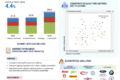
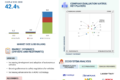
The provided market outlook projects the European data center rack market to grow from USD 1.18 billion in 2025 to USD 2.63 billion by 2032, representing a 12.1% CAGR.
The source also identifies enclosed racks as the largest rack-type segment, 19-inch racks as the majority width configuration, and large data centers as an important demand center. Above-52U racks are expected to record the highest CAGR among rack-height categories.
These figures describe market conditions; actual enterprise ROI will vary according to workload, electricity costs, facility design and deployment model.
Three Markets, Three Different Strategies
Enterprise, colocation and hyperscale operators represent distinct demand engines within the Europe Data Center Rack Market share, with different density and flexibility requirements.
Enterprise priorities:
- AI and analytics
- Databases
- Cybersecurity
- Private cloud
- Mission-critical applications
Colocation priorities:
- AI-ready capacity
- Flexible configurations
- High power density
- Advanced cooling
- Monitoring
- Reliable deployment
Hyperscale priorities:
- Standardized architectures
- High-density deployment
- Advanced cooling
- Specialized power systems
- Automation
- Large-scale procurement
The Europe Data Center Rack Market outlook will consequently depend on how each segment expands and modernizes its infrastructure.
Modernization Must Be Measurable
Successful rack modernization should target more useful compute per unit of power, space and capital—not simply a larger number of racks.
A conventional enterprise environment may begin with mixed configurations, limited rack-level monitoring, moderate density, predominantly air cooling, manual capacity planning and limited AI infrastructure.
A future-ready architecture can introduce:
- Dedicated high-density zones
- Higher-capacity rack designs
- Intelligent power monitoring
- Liquid-cooling readiness
- DCIM integration
- Modular expansion
- Automated capacity visibility
The transformation is valuable when it improves usable infrastructure output rather than simply increasing hardware volume. This is a central principle behind the Europe Data Center Rack Market forecast through 2032.
Competition Moves Beyond Steel
Rack providers can differentiate through AI readiness, liquid cooling, modularity, intelligence, services, energy efficiency and regulatory readiness—not price alone.
The competitive landscape includes HPE, Vertiv, Dell Technologies, Rittal, Eaton, Legrand, nVent, EFB-Elektronik and ITRack, among others.
Future differentiation can center on:
- AI-ready designs
- Liquid-cooling compatibility
- Modular architectures
- Intelligent monitoring
- Installation services
- Maintenance and support
- Regulatory readiness
- Energy efficiency
This creates an opportunity to evolve from selling physical racks toward delivering complete infrastructure solutions.
The Risks Behind Rapid Growth
Electricity availability, grid delays, energy costs, AI capital requirements, cooling complexity, regulation, supply chains and technology obsolescence remain major risks.
Key challenges include:
- Electricity availability
- Grid connection delays
- Rising energy costs
- High AI infrastructure costs
- Cooling complexity
- Regulatory compliance
- Supply-chain volatility
- Rapid hardware evolution
- Skills shortages
- Technology obsolescence
There is another risk: overbuilding. Designing every rack for extreme AI density can increase capital expenditure without creating equivalent value for conventional workloads.
The smarter strategy is planned scalability—deploying high density where it creates measurable economic value while maintaining conventional infrastructure where it remains appropriate.
The Executive Playbook for 2032
Businesses should prepare by aligning workload forecasts, power planning, cooling flexibility, intelligent monitoring and modular infrastructure.
Five actions stand out:
- Build a workload roadmap for AI, analytics, cloud and HPC.
- Map power requirements as a strategic capacity issue.
- Design cooling flexibility for future workload changes.
- Invest in intelligence through rack monitoring and DCIM.
- Standardize where possible to simplify deployment and expansion.
These steps transform the Europe Data Center Rack Market forecast from a market statistic into an actionable infrastructure strategy.
The 2032 Verdict: Racks Become Strategic Assets
By 2032, European racks are expected to become increasingly integrated with power, cooling, networking and intelligent management, driven by AI, sovereign cloud, hyperscale investment and energy constraints.
The Europe Data Center Rack Market trends point toward:
- AI-driven compute density
- Sovereign cloud expansion
- Hyperscale investment
- Colocation growth
- Liquid cooling
- Smart monitoring
- Modular infrastructure
- Energy efficiency
- Regulatory requirements
The defining question is changing from “How many racks can we install?” to “How much reliable computing value can each rack deliver?”
The provided Europe Data Center Rack Market forecast reaches USD 2.63 billion by 2032, but the larger story is the convergence of AI, energy, cooling, cloud and automation.
For enterprises, rack strategy should move higher on the technology agenda. For manufacturers, differentiation will increasingly depend on intelligence and adaptability. For colocation providers, AI-ready capacity can become a competitive advantage. For hyperscalers, modular and efficient rack architectures can underpin expansion.
The next generation of European digital infrastructure will not be defined simply by how many servers fit inside a cabinet. It will be defined by how efficiently each rack converts power, space and technology into trusted digital business value. That is the strategic opportunity behind the Europe Data Center Rack Market outlook through 2032.