Cell Isolation Market Overview
The global Cell Isolation Market, also referred to as the Cell Separation Market, is expanding rapidly as pharmaceutical companies, biotechnology firms, clinical laboratories, and academic institutions increasingly rely on high-quality cell populations for research and therapeutic applications.
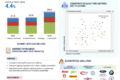
According to MarketsandMarkets™, the global cell isolation market is projected to grow from approximately USD 4.39 billion in 2026 to USD 7.97 billion by 2031, registering a CAGR of 12.7% during 2026–2031.
The increasing adoption of cell and gene therapies, single-cell analysis, immunology research, cancer biology, regenerative medicine, and personalized medicine is creating strong demand for efficient and reproducible cell separation technologies.
Cell Isolation Market at a Glance
- 2026 Market Size: USD 4.39 billion
- 2031 Projected Market Size: USD 7.97 billion
- CAGR (2026–2031): 12.7%
- Market Size Available: 2025–2031
- Largest Product Segment: Consumables
- Largest Technique: Centrifugation-based cell isolation
- Largest Cell Type: Human cells
- Largest Instrument Segment: Centrifuges
- Leading Region: North America
Download PDF Brochure – MarketsandMarkets™
What Is Cell Isolation?
Cell isolation is the process of separating specific cell populations from heterogeneous biological samples. The objective is to obtain cells with the desired characteristics, purity, viability, and concentration for downstream research, diagnostic, or therapeutic applications.
Cell isolation technologies are used to obtain populations such as:
- Immune cells
- Stem cells
- Leukocytes
- Primary cells
- Circulating tumor cells
- T cells
- B cells
- Other specialized cell populations
These isolated cells can subsequently be used in drug discovery, genomic analysis, biomarker research, cell therapy development, immunology, cancer research, and regenerative medicine.
Key Trends Driving the Cell Isolation Market
1. Growing Demand for Cell and Gene Therapies
The rapid development of cell and gene therapies is one of the most important factors driving demand for cell isolation technologies.
Cell therapy manufacturing requires efficient processes for collecting, separating, enriching, washing, and processing specific cell populations.
As more cell-based therapies progress through clinical development and commercialization, demand is increasing for GMP-compatible, scalable, reproducible, and closed-system cell isolation workflows.
2. Expansion of Single-Cell Analysis
Single-cell technologies are transforming biological research by enabling scientists to investigate individual cells rather than relying only on bulk populations.
Cell isolation is an important upstream step for single-cell sequencing, single-cell transcriptomics, immune profiling, and other high-resolution analytical techniques.
The growing use of single-cell analysis in cancer research, immunology, developmental biology, and precision medicine is therefore supporting market growth.
3. Increasing Adoption of Automated Cell Separation
Automation is becoming increasingly important as laboratories seek to improve throughput, consistency, and reproducibility.
Automated cell isolation platforms can reduce manual intervention and help standardize sample processing.
Technological developments include:
- Automated cell sorting
- Closed-system processing
- Automated magnetic separation
- Microfluidic separation
- Label-free isolation
- Integrated cell-processing platforms
- Automated sample preparation
These developments are particularly relevant for clinical and therapeutic applications where consistency and process control are critical.
4. Growth of Regenerative Medicine
Regenerative medicine increasingly relies on specialized cell populations for research and therapeutic development.
Stem cell isolation and enrichment are particularly important for developing cell-based treatments and investigating tissue regeneration.
The expansion of regenerative medicine research is therefore creating additional demand for cell isolation consumables, instruments, and separation technologies.
Consumables Segment Leads the Market
By product, the market includes consumables and instruments.
The consumables segment accounted for approximately 65% of the cell isolation market in 2025, making it the largest product segment.
Cell isolation workflows require regular use of reagents, kits, tubes, filters, media, magnetic beads, and other consumable materials.
The recurring nature of consumables demand supports the segment’s strong market position.
The increasing adoption of standardized isolation kits is also helping laboratories improve reproducibility and simplify complex cell-separation workflows.
Centrifugation-Based Cell Isolation Holds a Leading Position
By technique, centrifugation-based cell isolation accounted for the largest share of the market in 2025.
Centrifugation is widely used because it is versatile and compatible with numerous sample types.
Applications include:
- Density-gradient separation
- Cell washing
- Cell pelleting
- Sample preparation
- Leukocyte isolation
- Stem cell enrichment
- Peripheral blood mononuclear cell isolation
While advanced techniques such as magnetic-activated cell sorting, fluorescence-activated cell sorting, and microfluidics continue to gain adoption, centrifugation remains an important foundation of laboratory cell-processing workflows.
Human Cells Segment Dominates
By cell type, the market is segmented into human cells and animal cells.
The human cells segment held the largest market share in 2025.
Demand for human cell isolation is supported by extensive research involving:
- Immune cells
- Stem cells
- Circulating tumor cells
- Leukocytes
- Primary cells
- Cancer cells
Human-derived cells are particularly valuable in translational research, biomarker development, drug discovery, personalized medicine, and cell therapy development.
The growing adoption of immune profiling and single-cell analysis is expected to further strengthen demand for human cell isolation technologies.
Centrifuges Lead the Instruments Segment
By instruments, the cell isolation market includes:
- Centrifuges
- Cell sorters
- Magnetic-activated cell separator systems
- Filtration systems
- Other instruments
The centrifuges segment accounted for the largest share in 2025.
Centrifuges are widely used across academic laboratories, pharmaceutical companies, biotechnology organizations, clinical laboratories, and cell-processing facilities.
Their versatility, scalability, and compatibility with different biological samples make them an essential component of cell isolation workflows.
North America Leads the Cell Isolation Market
North America accounted for approximately 43% of the global cell isolation market in 2025.
The region’s leadership is supported by:
- Strong biopharmaceutical industry
- Extensive biomedical research infrastructure
- High investment in cell and gene therapy
- Early adoption of advanced cell-separation technologies
- Strong oncology and immunology research
- Established academic medical centers
- Presence of leading market players
- Increasing adoption of automated cell processing
The US represents a major contributor to regional growth because of its strong ecosystem of biotechnology companies, pharmaceutical manufacturers, clinical research organizations, and cell therapy developers.
The increasing adoption of GMP-grade consumables and closed-system cell-processing technologies is also supporting market expansion.
Request Sample Pages @ https://www.marketsandmarkets.com/requestsampleNew.asp?id=103931479
Advanced Cell Separation Technologies
The cell isolation market is evolving beyond conventional centrifugation toward increasingly sophisticated separation technologies.
Magnetic-Activated Cell Sorting
Magnetic-activated cell sorting uses magnetic particles to isolate specific cell populations. It is widely used for immune-cell isolation, stem-cell research, and cell therapy workflows.
Fluorescence-Activated Cell Sorting
Fluorescence-activated cell sorting enables researchers to identify and separate cells based on specific fluorescent markers.
The technology is valuable for high-resolution cell characterization and research applications.
Microfluidic Cell Separation
Microfluidic technologies use miniature fluidic systems to separate cells based on characteristics such as size, density, or surface properties.
These technologies can potentially enable more compact and automated cell-processing workflows.
Label-Free Cell Isolation
Label-free approaches can separate cells without requiring specific antibodies or labeling reagents, creating opportunities for applications where preservation of cell characteristics is important.
Role of Cell Isolation in Drug Discovery
Cell isolation is increasingly important in pharmaceutical research.
Researchers can isolate specific cell populations to investigate:
- Drug mechanisms
- Cellular responses
- Disease pathways
- Toxicity
- Biomarkers
- Immune responses
- Drug resistance
The ability to obtain high-purity and viable cell populations can improve the quality of downstream experimental results.
Cell Isolation and Precision Medicine
Precision medicine relies on understanding biological differences between patients and cellular populations.
Isolated patient-derived cells can be used for molecular analysis, immune profiling, biomarker discovery, and potentially individualized treatment research.
This is particularly important in oncology, where researchers may isolate tumor cells or immune-cell populations to investigate disease characteristics and treatment responses.
Future Outlook
The future of the cell isolation market is expected to be shaped by automation, miniaturization, closed-system processing, AI-assisted workflows, and GMP-compatible technologies.
Laboratories and biopharmaceutical manufacturers are increasingly seeking solutions that combine high purity, cell viability, scalability, reproducibility, and operational efficiency.
Future development areas are likely to include:
- Automated cell isolation
- Closed-system cell processing
- High-throughput cell sorting
- Label-free separation
- Microfluidic technologies
- AI-assisted cell identification
- GMP-compatible isolation systems
- Integrated cell-processing platforms
- Advanced single-cell workflows
As cell and gene therapy manufacturing expands, scalable and standardized cell isolation processes will become increasingly important.
Key Companies in the Cell Isolation Market
Major companies operating in the cell isolation market include:
- Danaher (US)
- Merck KGaA (Germany)
- Thermo Fisher Scientific Inc. (US)
- BD (US)
- Sartorius AG (Germany)
- Agilent Technologies, Inc. (US)
- Bio-Rad Laboratories, Inc. (US)
- QIAGEN (Netherlands)
- F. Hoffmann-La Roche Ltd (Switzerland)
- Revvity (US)
- Corning Incorporated (US)
These companies are developing cell separation instruments, reagents, consumables, automated platforms, cell-sorting technologies, and integrated solutions for research and therapeutic applications.
Conclusion
The global Cell Isolation/Cell Separation Market is experiencing strong growth as demand for high-quality cell populations increases across pharmaceutical research, biotechnology, clinical diagnostics, regenerative medicine, and cell and gene therapy.
With the market projected to grow from USD 4.39 billion in 2026 to USD 7.97 billion by 2031, at a CAGR of 12.7%, the industry presents significant opportunities for technology developers and life-science companies.
Consumables currently represent the largest product segment, while centrifugation remains a leading isolation technique. At the same time, advanced technologies such as magnetic separation, fluorescence-activated cell sorting, microfluidics, automation, and closed-system processing are expanding the capabilities of cell isolation.
North America remains the largest regional market, supported by its strong biotechnology ecosystem and substantial investment in cell and gene therapy.
As research moves toward increasingly precise cellular analysis and personalized therapies, efficient, scalable, and reproducible cell isolation will remain a critical foundation of modern life-science research and biomanufacturing.
Inquire Before Buying @ https://www.marketsandmarkets.com/Enquiry_Before_BuyingNew.asp?id=103931479