Vendor Neutral Archive (VNA) & PACS Market Overview
The global Vendor Neutral Archive (VNA) & PACS Market is expanding as healthcare organizations face rapidly increasing volumes of medical imaging data and growing demand for interoperable, centralized, and scalable imaging-management systems.
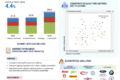
According to MarketsandMarkets™, the VNA & PACS market is projected to grow from approximately USD 5.60 billion in 2026 to USD 8.57 billion by 2031, registering a CAGR of 8.9% during 2026–2031.
The transition from traditional departmental PACS environments toward enterprise-wide imaging architectures is becoming a major market trend. Healthcare providers are increasingly looking for solutions that can consolidate images across departments, locations, modalities, and clinical specialties while enabling secure access to imaging data.
VNA & PACS Market at a Glance
- 2026 Market Size: USD 5.60 billion
- 2031 Projected Market Size: USD 8.57 billion
- CAGR (2026–2031): 8.9%
- Market Size Available: 2025–2031
- Largest Modality: X-ray
- Fastest-growing Deployment Model: Cloud-based
- Largest Region: North America
- Fastest-growing Application: Orthopedics
Download PDF Brochure – MarketsandMarkets™
What Are VNA and PACS?
A Picture Archiving and Communication System (PACS) enables healthcare organizations to store, retrieve, manage, and distribute medical images digitally.
A Vendor Neutral Archive (VNA) provides a centralized repository for medical images and related clinical information, designed to support interoperability across imaging vendors, modalities, departments, and healthcare facilities.
Together, VNA and PACS technologies can help healthcare organizations create enterprise-wide imaging environments that improve accessibility, data management, and clinical workflows.
Key Trends Driving the VNA & PACS Market
1. Rapid Growth of Medical Imaging Data
Healthcare providers are generating increasing amounts of imaging data through X-ray, CT, MRI, ultrasound, mammography, and other modalities.
The growth of high-resolution imaging, 3D imaging, and advanced diagnostic technologies is creating substantial storage and management requirements.
VNA platforms can help healthcare organizations consolidate imaging data into centralized repositories while maintaining access across multiple departments and facilities.
2. Shift Toward Enterprise Imaging
Healthcare organizations are increasingly moving beyond departmental PACS systems toward enterprise imaging strategies.
An enterprise imaging architecture can connect imaging information from multiple specialties and locations, allowing clinicians to access relevant images regardless of the original acquisition system.
This approach is particularly valuable for large hospital networks and integrated delivery networks managing multiple facilities.
3. Increasing Adoption of Cloud-Based Solutions
The cloud-based deployment model is projected to register the highest CAGR of 10.4% during 2026–2031.
Cloud-native VNA and PACS solutions can offer scalability, remote accessibility, centralized management, and potentially lower infrastructure requirements.
Cloud deployment is becoming particularly attractive to healthcare providers seeking flexible imaging infrastructure without relying exclusively on on-premises hardware.
4. AI-Powered Imaging Workflows
Artificial intelligence is becoming increasingly integrated with medical imaging workflows.
AI technologies can support:
- Image analysis
- Automated triage
- Workflow prioritization
- Clinical decision support
- Image classification
- Quality assurance
- Reporting assistance
The integration of AI with PACS and VNA environments can help organizations transform large volumes of imaging data into actionable clinical information.
X-Ray Segment Leads by Modality
The X-ray segment accounted for approximately 42.8% of the VNA & PACS market in 2025, making it the largest modality segment.
X-ray remains one of the most widely used medical imaging technologies across hospitals, outpatient imaging centers, emergency departments, and specialty practices.
The high volume of X-ray examinations creates substantial requirements for image storage, retrieval, distribution, and long-term archiving.
At the same time, growing use of CT, MRI, ultrasound, and advanced imaging technologies is increasing the overall volume and complexity of imaging data managed through VNA and PACS systems.
Orthopedic Applications Represent a High-Growth Opportunity
The VNA & PACS market includes applications such as:
- Cardiology
- Orthopedics
- Oncology
- Neurology
- Obstetrics & Gynecology
- Other medical specialties
Among these applications, orthopedics is expected to register the fastest growth during the forecast period.
The growth is supported by the increasing global burden of musculoskeletal disorders, traumatic injuries, and joint replacement procedures.
Orthopedic care relies heavily on X-ray, CT, and MRI imaging. The increasing volume of longitudinal imaging data creates a strong need for reliable storage, retrieval, sharing, and comparison of images over time.
The World Health Organization has estimated that approximately 1.71 billion people globally live with musculoskeletal conditions, highlighting the substantial need for orthopedic diagnosis and treatment.
Independent Vendors Hold a Leading Position
The market can be divided into independent vendors and third-party vendors.
The independent vendor segment held the largest share of the VNA & PACS market in 2025.
Independent vendors can provide interoperable solutions designed to work across different imaging technologies and healthcare IT environments.
This is particularly important for healthcare organizations seeking to avoid vendor lock-in and consolidate imaging data generated by multiple systems.
Independent VNA platforms can also support:
- Multi-vendor interoperability
- Long-term image archiving
- Cross-departmental image access
- EHR integration
- Cloud deployment
- Enterprise imaging strategies
- Legacy system integration
As healthcare organizations increasingly prioritize interoperability and open architectures, independent vendors are positioned to benefit from this transition.
North America Leads the VNA & PACS Market
North America accounted for approximately 42.9% of the VNA & PACS market in 2025, making it the largest regional market.
Several factors contribute to the region’s leadership:
- Large healthcare networks
- Extensive hospital infrastructure
- Significant investment in healthcare IT
- High adoption of digital imaging
- Increasing enterprise imaging initiatives
- Growing cloud adoption
- Strong presence of imaging technology companies
- Demand for interoperable healthcare systems
The US healthcare market includes thousands of hospitals and large multi-site healthcare organizations, creating substantial demand for centralized imaging data management.
The region is also characterized by strong innovation activity and early adoption of cloud-based imaging, AI-enabled workflows, and enterprise imaging architectures.
Recent Technology Developments
Technology providers are increasingly focusing on cloud-first imaging environments and AI-enabled workflow automation.
In January 2026, FUJIFILM Holdings Corporation demonstrated advancements in its cloud-first Synapse PACS platform, including AI-powered workflow orchestration, following developments showcased around the RSNA 2025 event.
Similarly, Siemens Healthineers has highlighted the growing movement toward cloud-native VNA and PACS environments with AI-supported triage capabilities.
Other industry developments include expansion of cloud-based VNA platforms and improvements in interoperability across multi-vendor imaging environments.
These developments demonstrate the industry’s transition toward more intelligent, connected, and scalable imaging infrastructure.
Benefits of VNA & PACS Adoption
Healthcare organizations can gain several benefits from implementing VNA and PACS solutions.
Improved Accessibility
Centralized imaging repositories allow authorized clinicians to access patient images from different locations and departments.
Enhanced Interoperability
Vendor-neutral architectures can help healthcare organizations manage images from multiple imaging vendors and legacy systems.
Better Data Management
Centralized storage can simplify image organization, retrieval, retention, and long-term archiving.
Workflow Optimization
Integration with AI and workflow orchestration tools can help automate image routing, prioritization, and clinical processes.
Scalability
Cloud-based architectures can provide flexible infrastructure as imaging volumes increase.
Future Outlook
The future of the VNA & PACS market is expected to be shaped by the convergence of cloud computing, enterprise imaging, AI, interoperability, and advanced data management.
Healthcare organizations are likely to continue moving away from fragmented departmental imaging systems toward enterprise-wide architectures that connect imaging data across hospitals, outpatient facilities, specialties, and clinical workflows.
Future developments are expected to focus on:
- Cloud-native PACS
- Enterprise VNA
- AI-powered image triage
- Automated workflow orchestration
- Interoperable imaging platforms
- Multi-site image sharing
- Advanced cybersecurity
- EHR integration
- Remote image access
- AI-assisted reporting
The increasing volume of imaging data will make efficient storage, retrieval, and intelligent management increasingly important.
Key Companies in the VNA & PACS Market
Major companies operating in the VNA & PACS market include:
- Hyland Software, Inc. (US)
- Agfa-Gevaert Group (Belgium)
- Canon Medical Systems Corporation (Japan)
- FUJIFILM Holdings Corporation (Japan)
- GE HealthCare (US)
- Merative L.P. (US)
- Sectra AB (Sweden)
- Siemens Healthineers AG (Germany)
- BridgeHead Software Ltd. (UK)
- Canopy Partners (US)
- Novarad Corporation (US)
- PostDICOM (US)
- CrelioHealth Inc. (India)
- Medicasoft LLC (US)
- Esaote S.p.A. (Italy)
- PaxeraHealth Corp. (US)
- VISUS Health IT GmbH (Germany)
- Aspyra, LLC (US)
- Koninklijke Philips N.V. (Netherlands)
These companies are competing through cloud-based imaging platforms, enterprise VNA solutions, interoperability capabilities, AI integration, workflow automation, and advanced image-management technologies.
Conclusion
The global Vendor Neutral Archive (VNA) & PACS Market is transitioning from traditional departmental image-management systems toward intelligent, enterprise-wide, cloud-enabled imaging ecosystems.
With the market projected to grow from USD 5.60 billion in 2026 to USD 8.57 billion by 2031, at a CAGR of 8.9%, opportunities are expanding for healthcare IT providers, imaging technology companies, cloud infrastructure providers, and AI developers.
The strong position of X-ray, rapid growth of cloud deployment, increasing demand for orthopedic imaging management, and North America’s leadership highlight the major areas of market development.
As healthcare organizations continue to prioritize interoperability, centralized data management, AI-enabled workflows, and scalable infrastructure, VNA and PACS technologies will remain critical components of the next generation of enterprise imaging.